 Ultimate guide
Can You Really Do Room Design on a Budget?
Last Updated: November 26, 2026
Quick Summary
Room design on a budget works when you plan the money before you plan the furniture. Split your total into three tiers, spend first on anchor pieces you'll live with for years, then layer in impact pieces and cheap swap-and-change accessories. Protect the anchor and lighting first, since those are the hardest to fake.
- Work out three numbers before spending: total budget, per-category spend, and the anchor piece limit.
- A common split weights about 50% toward the anchor piece, with smaller shares for rug, lighting, textiles, art and accessories.
- Aim for at least 60 cm of clear walkway between furniture and walls, closer to 90 cm on main routes.
- Leave roughly 40-45 cm between the sofa edge and the coffee table so the seating reads as one zone.
- Save on rugs, curtains, wall art and tables; spend on the sofa, bed frame and lighting.
Table of Contents
- Start With a Realistic Room Design Budget
- Small Room Design on a Low Budget
- Low-Budget Bedroom Design Ideas That Actually Work
- Living Room Updates Without the Price Tag
- Free Room Design Tools Worth Trying
- Small Room Design for a Couple on a Budget
- Rental-Friendly and Reversible Updates
- Common Budget Decorating Mistakes to Avoid
- Frequently Asked Questions
Start With a Realistic Room Design Budget
Room design on a budget works when you plan the money before you plan the furniture, and that is exactly what room design on a budget demands. Most people do it backwards: they buy the sofa they love, then discover they can't afford a rug, lighting, or anything to hang on the wall. The room ends up half-finished for a year.
This guide covers the full process, from setting a realistic budget to executing reversible, rental-friendly updates that actually look intentional. Below, we'll show you exactly how to stretch every dollar and where the cheap shortcuts genuinely pay off.
The core idea is simple. A budget isn't a restriction on style; it's what forces you to make decisions instead of accumulating random pieces. When you cap the spend, you stop buying things that don't fit and start buying things that do. That single shift is the difference between a room that looks designed and one that looks like a storage unit with a couch in it.
Before you spend a cent, work out three numbers: what you can spend in total, what you can spend per category, and what you're willing to spend on the one piece that anchors the room.
The Three-Tier Budget Framework
Split your total into three tiers so you know what's fixed and what's flexible.
- Tier 1, Non-negotiable: The anchor pieces you'll live with for years. A sofa, a bed frame, a desk. Spend here first and spend once.
- Tier 2, Impact pieces: Rugs, lighting, curtains, and a coffee table. These change how a room feels for a fraction of the anchor cost.
- Tier 3, Swap-and-change: Throw pillows, wall art, plants, and small accessories. Cheap to buy, cheap to replace, and the fastest way to shift a room's mood.
Most budget failures happen when people spend Tier 1 money on Tier 3 items. Ten decorative cushions won't fix an empty room.
A Sample Spending Plan You Can Copy
A percentage split is more useful than a dollar figure because it scales to whatever you actually have. A common pattern among budget decorators is to weight the largest share toward the anchor piece, with smaller shares for impact pieces and swap-and-change items. Your own split depends on your total and your priorities.
Here is how that split can play out for a living room and a bedroom. Local secondhand prices vary enormously, so treat the shares as planning guides.
| Category | Living room share | Bedroom share | Notes |
|---|---|---|---|
| Anchor piece (sofa or bed frame) | ~50% | ~50% | Buy once; secondhand solid wood or a well-kept used sofa can halve this |
| Rug | ~10% | ~5% | Largest size you can afford; flatweave and secondhand wool are cheapest per square metre |
| Lighting | ~10% | ~10% | Two or three warm sources beat one ceiling fixture |
| Curtains and textiles | ~10% | ~15% | Fabric panels and bedding do the softening work |
| Wall art and mirrors | ~10% | ~10% | Thrifted frames plus cheap prints |
| Accessories and plants | ~10% | ~10% | The swap-and-change layer |
Bedroom share
If your total is very small, protect the anchor and the lighting first. Those two categories are the hardest to fake and the most expensive to redo. Everything else can be layered in over months.
A Step-by-Step Planning Sequence
Inspiration is easy; sequence is what makes a budget work. Run the room in this order and you avoid the buy-first, regret-later cycle.
- Measure the room and the furniture. Note wall lengths, door swings, window sills, and the depth of any piece you plan to keep. This is the step most people skip and the one that causes the most returns.
- Set the total and the category split. Write the three tier numbers down before you open a single shopping tab.
- Choose the palette and one focal point. Two or three tones plus a single place the eye should land. Lock this before buying anything.
- List what stays, what moves, and what goes. Removing a piece is free and often does more than adding one.
- Shop Tier 1 first, then Tier 2, then Tier 3. Buying out of order is how budgets collapse.
- Arrange, live with it for a week, then accessorize. The final layer should respond to how the room actually feels, not to a mood board.
Where to Save and Where to Spend
Consider saving on anything that gets replaced often, and spending on structure and anything you sit or sleep on daily.
| Category | Save or Spend | Why |
|---|---|---|
| Sofa and bed frame | Spend | Used daily for years; cheap versions sag fast |
| Rug | Save | A large flatweave or secondhand rug costs little and covers a lot |
| Lighting | Spend | One good lamp beats three flimsy ones |
| Curtains | Save | Fabric panels are cheap and add instant softness |
| Wall art | Save | Thrifted frames and prints deliver the most visual impact per dollar |
| Coffee and side tables | Save | Secondhand solid wood outperforms new particleboard |
A common mistake is buying a cheap sofa to "save" money and then replacing it soon after. The same logic applies to mattresses and desk chairs.
Secondhand upholstered furniture can carry wear that isn't visible in photos, so inspect seams, cushions, and the frame in person before buying.
Small Room Design on a Low Budget
Small room design on a low budget is mostly about subtraction, not addition. The cheapest way to make a small space feel bigger is to remove clutter and give every piece a clear job. You don't need more furniture; you need less of it, placed better.
Start with the layout. Measure the room's real dimensions, including door swings and window sills, and sketch the footprint of your existing furniture on paper. Most small rooms fail because a piece is a few centimetres too deep or blocks a walkway. Once you know the numbers, you can decide what stays and what goes before you shop.
The Layout Math That Makes a Small Room Work
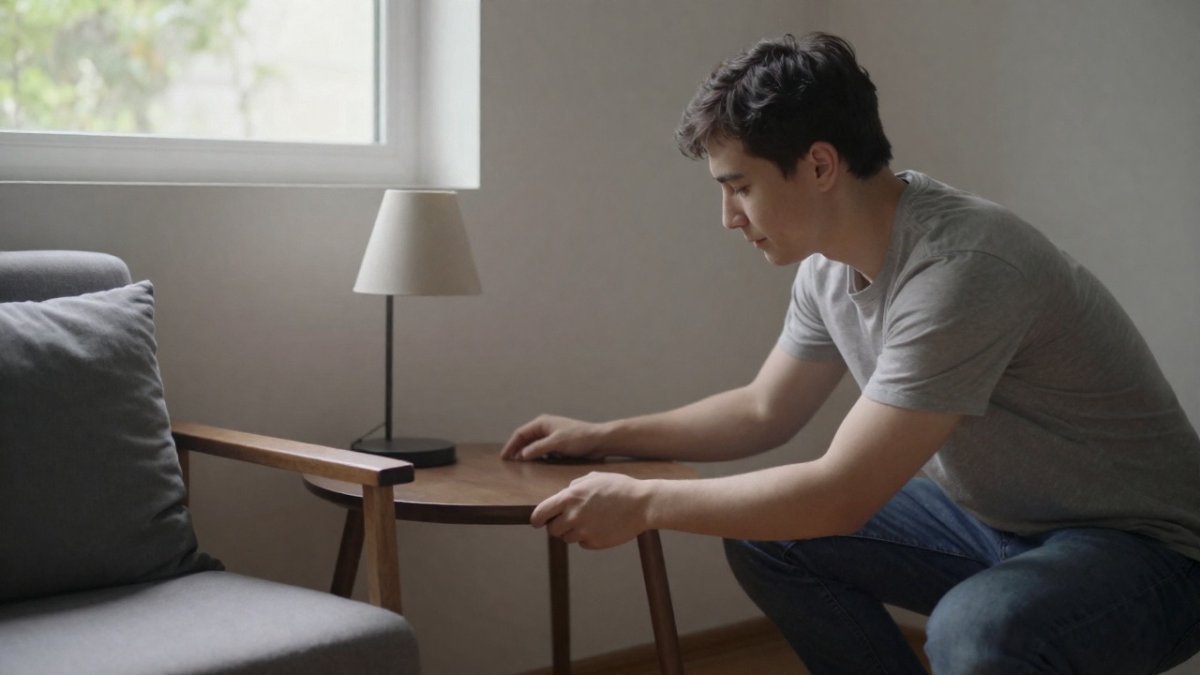
Before you move a single piece, run three measurements. They cost nothing and prevent almost every small-room mistake.
- Walkway width. Aim for at least 60 cm (about 24 inches) of clear path between furniture and walls, and closer to 90 cm (about 36 inches) on the main route through the room. Anything narrower reads as cramped even when the room is technically fine.
- Coffee table gap. Leave roughly 40-45 cm (16-18 inches) between the sofa edge and the coffee table. Less and you can't pass; more and the seating area stops feeling like one zone.
- Rug coverage. A living-room rug should sit under at least the front legs of the sofa and reach past the coffee table. A rug that floats in the middle of the floor makes the room look smaller, not bigger.
Then sketch to scale. A simple trick is to cut paper footprints for each piece at 1:20 or 1:50 scale and slide them around the sketch. You'll see immediately whether a sofa blocks a door swing or whether a bed leaves enough room to open a wardrobe.
Five Moves That Cost Little and Change a Lot
- Float the furniture off the walls. Pulling a sofa or bed slightly away from the wall creates depth and makes the room feel intentional. Even 10-15 cm helps.
- Use vertical space. Tall, narrow shelving draws the eye up and adds storage without eating floor area. Wall-mounted shelves above a desk or bed reclaim floor space for free.
- Pick one focal point. A single accent wall, a large piece of wall art, or a statement lamp gives the eye somewhere to land. More than one focal point in a small room reads as noise.
- Layer lighting. One overhead light flattens a room. A floor lamp plus a table lamp creates warmth and zones. Warm bulbs, not cool white.
- Choose multi-use pieces. An ottoman that stores blankets, a side table that doubles as a stool, a bed with drawers underneath.
What most guides miss is that a small room reads as "designed" when the colour palette is tight. Two or three tones carried through furniture, textiles, and wall treatment do more than any single purchase. A tight palette also hides mismatched secondhand pieces, which is a budget advantage, not just a style one.
Rental-Friendly Layout Fixes
If you rent, the layout is often the only thing you can change freely. Rely on freestanding pieces rather than built-ins: a leaning mirror instead of a wall-mounted one, a bookcase as a room divider, tension rods for curtains. These moves are reversible, and they travel with you when you move.
Floating furniture in a very narrow room can backfire by shrinking the walkway, so measure the gap first before moving a sofa away from the wall.
Low-Budget Bedroom Design Ideas That Actually Work
Low-budget bedroom design ideas come down to one principle: the bed is the focal point, so everything else should support it. You don't need a new bedroom set. You need a headboard treatment, good bedding, and lighting that isn't a bare ceiling bulb.
The headboard is the highest-impact, lowest-cost upgrade in most bedrooms. A fabric-wrapped panel, a plank wall behind the bed, or a simple board and batten treatment gives the bed visual weight without a new frame. These are DIY-friendly and reversible if you rent.
Bedding does more than most people expect. A duvet cover in a solid, warm tone layered with a textured throw reads as styled, even over a basic mattress. Skip the matching set; mixing two or three textiles looks more considered.
For lighting, a pair of wall-mounted sconces or clip-on reading lights frees up nightstand space and adds a soft, layered glow. Add a small side table from a thrift store, a lamp, and one piece of wall art above the bed, and the room is done.
Buying a full bedding set in a bold print can lock you into one look, so solid base layers with swappable accents are a flexible option.
Living Room Updates Without the Price Tag
Living room decorating on a budget is about the pieces guests actually notice: the rug, the lighting, and what's on the wall. The sofa can stay. The coffee table can stay. Change those three layers and the room feels new.
Start with the rug. A large rug that sits under the front legs of the sofa anchors the seating area and makes a mismatched furniture set look deliberate. Secondhand rugs are one of the best-kept secrets in budget decorating; a good flatweave or wool rug costs a fraction of new and wears better.
Then address lighting. Swap a single harsh overhead for a floor lamp in a corner and a table lamp on a side table. Warm bulbs, not cool white. This one change does more for a living room's mood than any furniture purchase.
Finally, the wall. A gallery of thrifted frames with cheap prints, a large secondhand mirror, or a simple plank wall behind the TV gives the room a focal point. Wall art and mirrors are where thrifted finds shine.
A slipcover on an old sofa can change its colour and hide wear. Measure carefully and choose a neutral shade for the best result.
Free Room Design Tools Worth Trying
Free room design tools let you test a layout before you buy anything, which is the single best way to avoid expensive mistakes. You don't need paid software to plan a room; a few free options cover most of what a renter needs.
- Paper and a tape measure. Sketch the room to scale, cut out paper footprints of your furniture, and move them around. It's free, fast, and surprisingly accurate.
- Free floor-planning apps. Several free tools let you drop in room dimensions and drag furniture to test layouts. Use them to check walkways and door swings.
- Colour and mood tools. Free palette generators help you lock a colour scheme before you shop, so every purchase fits.
- Secondhand marketplaces. Not design tools exactly, but the best free research for what's available locally at low cost.
Free tools generally show you layout rather than style, so they can tell you a sofa fits but not whether the room looks cohesive. Roast & Reveal offers a 30-second roast video, an AI-powered redesign, a mood board, and a shoppable list, delivered within 24 hours, with no design vocabulary required.
If you're weighing a paid service against free tools, consider what you're actually buying: free tools give you measurements, while a redesign service gives you a plan and a shopping list. For current prices, check the Roast & Reveal website or request a quote.
Small Room Design for a Couple on a Budget
Small room design for a couple on a budget has one extra challenge: two people's stuff in one space. The fix is zoning and storage, not a bigger room. Divide the room into clear functions, then give each person and each activity its own zone.
For a shared bedroom, that means agreeing on one colour palette and one focal point before either person buys anything. Two people decorating separately is how rooms end up with mismatched furniture and competing styles. Pick the palette together, then split the categories: one person owns textiles, the other owns lighting and wall art.
Storage is where couples win or lose. Under-bed storage boxes, a storage ottoman, and tall shelving keep shared clutter out of sight. A single large shelving unit beats several small ones because it consolidates and looks intentional.
For a shared living space, define zones with the rug and lighting rather than walls. A rug under the seating area and a lamp marking a reading corner give two people their own territory in one room.
If you're stuck on where to start, a second opinion can help. Roast & Reveal's AI redesign works from a photo of your room to produce a mood board and shoppable list.
Rental-Friendly and Reversible Updates
The best rental updates are the ones you can undo in an afternoon without losing a deposit. Removable wallpaper, tension rods, freestanding shelving, and peel-and-stick wall treatments all deliver visual impact while staying reversible.
- Removable wallpaper and peel-and-stick panels for an accent wall, no paint required.
- Tension rods for curtains, no drilling.
- Freestanding shelving and leaning mirrors instead of wall-mounted pieces.
- Renter-friendly plank wall or board and batten panels that mount with removable adhesive strips.
- Slipcovers and throws to change upholstery colour without replacing furniture.
- Command-style hooks and clips for wall art and lighting.
Watch out: some removable products damage paint or drywall if left too long or applied to a poorly prepared surface. Test a small patch first and check your lease before committing to anything on the walls.
Reversible updates also make financial sense. When you move, the pieces come with you, so your budget decorating isn't thrown away with the deposit.
Common Budget Decorating Mistakes to Avoid
The most common budget decorating mistakes all share one root cause: buying before planning. When you shop without a palette, a layout, and a category budget, you end up with pieces that don't fit together or don't fit the room.
Here are the ones we see most often:
- Skipping measurements. Furniture that's a few centimetres too deep ruins a small room's flow. Measure first, always.
- Buying a full matching set. Matching sets look showroom-flat and lock you in. Mix secondhand and new instead.
- Spending the whole budget on one piece. A great sofa with no rug, lighting, or art still looks unfinished.
- Ignoring lighting. A single overhead bulb makes any room feel cheap. Layer two or three light sources.
- Over-decorating with small accessories. Clutter reads as mess, not style. Fewer, larger pieces look more intentional.
- Buying trend pieces at full price. Trends fade. Buy them secondhand or skip them.
- Forgetting the walls. Bare walls make a room feel unfinished no matter how good the furniture is.
The fix for all of these is the same: plan the room as a whole before you spend. A mood board, a measured layout, and a category budget prevent every mistake on this list.
That's where a fast, structured second opinion earns its keep. Roast & Reveal turns your room photos into a 30-second roast and a professional AI redesign, then delivers a mood board and a shoppable list within 24 hours. You get the plan and the shopping list in one go, which is exactly what stops the buy-first, regret-later cycle.
Budget room design isn't about spending less on everything; it's about spending deliberately on the pieces that matter. The plan comes first, the purchases come second, and the room comes together on purpose instead of by accident.
If you're stuck staring at a room that doesn't work and you don't know which piece to buy first, Roast & Reveal can help. Send in your room photos to receive a personalized 30-second roast video, an AI-powered redesign, a mood board, and a shoppable list within 24 hours. No design vocabulary needed, just your phone and a sense of humour. Get started with Roast & Reveal and turn your mismatched apartment into a room you actually want to show off.
Frequently Asked Questions
What is the 3-5-7 rule in interior design?
The 3-5-7 rule is a guideline for arranging accessories and decor items in odd-numbered groupings (three, five, or seven) to create visual balance. Odd numbers feel more natural and dynamic than even pairs. For a room design budget, apply it to throw pillows, wall art, or shelf styling: group three small vases together, or hang five framed prints in a cluster. It helps you make a bigger impact with fewer items, so you spend less on accessories while still achieving a pulled-together look.
Is there a website where I can design a room for free?
Yes, several free room design tools exist, including browser-based planners that let you upload a photo, drag and drop furniture, and test paint colors. Some AI-powered options generate a mood board from a single photo at no cost. These free room design tools are great for visualizing layout changes before you buy anything. For a more tailored plan that includes a shoppable list and a professional-looking mood board, Roast & Reveal offers a fast, affordable alternative to traditional design services, with pricing available on their website.
How can I make my room look better without spending much money?
Focus on high-impact, low-cost changes: rearrange furniture to improve flow, declutter surfaces, swap in fresh throw pillows or a slipcover, and add a lamp for layered lighting. Use free room design tools to test layouts before moving heavy pieces. Repurpose items you already own, like using a bookshelf as a room divider or a dresser as a console table. These small updates can shift the feel of a room without a full room design budget.
What are the best low-budget design ideas for a small room?
For small room design on a low budget, prioritize multi-functional furniture, vertical storage, and light colors to make the space feel larger. Use a mirror to bounce light, choose a rug that covers most of the floor to visually expand the area, and keep window treatments simple. Rental-friendly updates like removable wallpaper or tension rods let you personalize without permanent changes. A free room design tool can help you test furniture placement before committing, and a service like Roast & Reveal can provide a mood board and shoppable list within 24 hours.
How can two people make a small room feel comfortable and organized?
For small room design for a couple on a budget, divide the space into zones (sleep, work, relax) and choose furniture with dual purposes, like a storage ottoman or a bed with drawers. Use vertical space with wall-mounted shelves and hooks. Agree on a color palette and stick to it to avoid visual clutter. Rotate seasonal items to save space. Free room design tools can help you map out a layout that gives each person a sense of ownership without overcrowding the room.
Can ChatGPT design a room?
ChatGPT can offer general room design ideas based on text prompts. For a visual approach, AI-powered services like Roast & Reveal work from a room photo to generate a redesign and shoppable list.
